Author: fcmblog

How One Local Workforce Board is Coordinating Employer Engagement Regionally
Businesses and workers across the country have been nothing if not resilient over the past two years, as they worked to overcome unprecedented challenges brought on by the pandemic. Businesses in California’s Santa Cruz County are no exception. A recent report by the Santa Cruz County Workforce Development Board (SCCWDB) highlights the major issues businesses face within […]
Businesses and workers across the country have been nothing if not resilient over the past two years, as they worked to overcome unprecedented challenges brought on by the pandemic. Businesses in California’s Santa Cruz County are no exception. A recent report by the Santa Cruz County Workforce Development Board (SCCWDB) highlights the major issues businesses face within the current environment.
To assist businesses with a targeted recovery effort, the SCCWDB created the Business Resource Network (BRN), a talented group of well-connected business experts who leverage public-private funding and resources to ensure Santa Cruz companies remain competitive.
Peter Detlefs, a BRN team member and Business Services Manager for Workforce Santa Cruz County, explained BRN partners include representatives from city and county governments, nonprofits and public sector organizations whose main focus is to determine the biggest pain point keeping employers awake at night and finding solutions to their issues.
“We can then make an appropriate referral within our network to an organization that has the right expertise to solve challenges, including talent recruitment and workforce training, business advising, financing, or simply doing business in our county,” he said.
To expand reach to new companies that are not familiar with the BRN, the SCCWDB launched a proactive outreach campaign by leveraging a national initiative called Behind Every Employer, a digital advertising campaign that strategically connects companies with education and workforce organizations across the country to provide solutions for the workforce challenges they face.
SCCWDB adopted this campaign for the BRN. The campaign includes a dedicated landing page that highlights available services, digital ads to garner employer leads from Twitter and LinkedIn, and an Appointment Lab that sets up appointments to meet with high-value businesses that want to partner and utilize services.
The campaign also includes the research necessary to create the ideal customer profile, along with key message points to use in engaging employers. The campaign launched in early February 2022, and so far, the targeted outreach to 679 companies has yielded a 53% open rate of the invitation to connect – that’s 34% higher than industry benchmarks. Of the 364 companies that opened the invitation and/or clicked on an ad, approximately 13% have asked to be contacted, and eight high-value appointments have been established in just two weeks.
“Our campaign focus is to coordinate employer engagement efforts with our BRN team members and to make sure companies have the resources they need to recover and grow,” said SCCWDB Director Andy Stone. “The digital ads, coupled with the Appointment Lab, eliminate the effort, time and resources it takes for effective outreach, so the BRN team members can instead focus on developing and nurturing these businesses to gain new market share, all without adding additional staff.”
Leaders of the Behind Every Employer campaign are allowing local workforce and education organizations to leverage the brand and work with Full Capacity Marketing to create a local lead generation campaign, just as SCCWDB is doing.
If you are a workforce or education organization looking to step up your employer engagement efforts, get more information or contact us for a consult at https://behindeveryemployer.org/join-the-movement.
Share this article
Lead Generation Got You Down? Pivot to Building Brand Awareness to Boost College Enrollment Numbers
Is college worth it? That’s a question more and more people are asking themselves – and that is creating a need to rethink lead generation campaigns and take a step toward building greater brand awareness for your college.

Brand Videos: A Valuable Asset for Workforce & Education Organizations
Often short, well-produced, and designed to capture the attention of a target audience, a brand video is a marketing tool that promotes a brand, its products or services, or its values and mission. In today’s fast-paced digital landscape, many private sector companies use well-crafted brand videos to stand out from their competitors. But can this […]

From Digital Noise to Community Trust: How One Adult School Skyrocketed Net Fans by 3,950%
Social media provides organizations with a space to build trust and develop meaningful relationships with their audiences. By implementing an intentional social media strategy, South Bay Adult School successfully enhanced its outreach, resulting in increased post impressions, engagement, and more meaningful connections with students.
Thought Leaders in Workforce, Education & Entrepreneurship
Website Maintenance – What Does it Mean?
Launching a website can feel like the culmination of a long journey! You have likely spent months working with a team on strategy, user experience, development and testing before you launch. It is tempting to think this is the end of the journey and that you can step back and let your customers/clients/audience use the […]

Launching a website can feel like the culmination of a long journey! You have likely spent months working with a team on strategy, user experience, development and testing before you launch. It is tempting to think this is the end of the journey and that you can step back and let your customers/clients/audience use the site without any additional work. This is a common mistake.
Websites, even the simplest ones, require continued care like almost anything else worthwhile. This includes consistent monitoring for issues, security updates, accessibility issues and site performance challenges. Each of these impact the way your users, partners and even search engines interact with your site. How do you prevent a negative user experience? The answer is website maintenance.
What is Involved in Website Maintenance?
Every time someone comes to your website (including a search engine) it is an opportunity for you to present them with the experience they deserve. Website maintenance is the process of ensuring that your website is doing exactly that on every visit.
- Maintaining a Delightful Consumer Experience
The consumer experience starts the moment they land on your homepage and continues until the user hopefully finds what they are looking for. Over time, as you update the content on your website and as technology changes, it can be easy for links to stop working, pages to slow down and functionality to completely break. A good maintenance plan covers continual checks for these types of problems and allows them to be resolved proactively. If you let small issues pile up, they can become difficult and costly to repair, but if they are handled on a week-by-week, month-by-month basis, they are typically quick and simple to find and fix.
2. Maintaining Security
Some of the most common issues that poorly maintained sites will experience are security vulnerabilities. While your site may start its life using the most state-of-the-art systems and technology, the web is constantly evolving and your digital experience needs to keep up to remain safe. Out-of-date webservers, content management systems and development frameworks are constantly being targeted by hackers and other malicious actors. Even if you are not the subject of a direct attack, using out-of-date software can cause other tools (browsers, search engines, firewalls) to flag your website as a security vulnerability. Like everything else, the best solution is also the simplest: weekly and monthly maintenance can keep your website up-to-date and ensure the security vulnerabilities are addressed promptly to minimize risks to your brand and your clients.
3. Maintaining an American with Disabilities Act (ADA)-Compliant Website
Maintaining ADA compliance is not just a regulatory requirement, but also a large part of presenting a quality experience to your consumers. Designing and developing for accessibility ensures all users of your website have a delightful experience regardless of how they consume your content. It also ensures that tools like screen readers and search engines are able to consume all of your content.
Unfortunately, most people think ADA compliance is as simple as running a couple of checks after they launch their website. However, every time your website is updated it is important to ensure the content and functionality continue to be in compliance with accessibility best practices. The best way to achieve this is through regular audits and site reviews focused on frequently changing parts of your website. Accessibility fixes, if done regularly, are typically quick and inexpensive, however if you let them pile up they can be costly both from a resolution perspective but also from a regulatory perspective.
Get Elite Results From Your Website
Most people treat website maintenance as an afterthought, something you can revisit sometime in the future, after you have been able to enjoy your new website for a few months. Instead, it is better to think about maintenance like the food a high-performing athlete consumes. If you want elite results from your website, it needs to be kept in tip-top shape with the best food/maintenance available.
Full Capacity Marketing offers full service maintenance solutions for all of our clients. Whether we’re building a new website for you or you have an existing website that needs better maintenance to achieve peak performance, we can help you get it there. Contact us for a consultation.
Share this article

Hacienda La Puente Adult Education: A Case Study in Effective Storytelling
People love a good story. Stories create emotional connections. They make information memorable. Read on to learn why you should pause to ask: What’s my organization’s story, and how are we telling it?

Using AI & Technology for Workforce & Education Marketing
While artificial intelligence (AI) has been viewed as a major disrupter by many, marketing is one of the areas where it is widely predicted that it will drive positive changes. In fact, a McKinsey study found that marketing is the single organizational function, along with sales, where AI will have the most financial impact. This means […]
Lead Generation Got You Down? Pivot to Building Brand Awareness to Boost College Enrollment Numbers
Is college worth it? That’s a question more and more people are asking themselves – and that is creating a need to rethink lead generation campaigns and take a step toward building greater brand awareness for your college.
Thought Leaders in Workforce, Education & Entrepreneurship
Get the Equity Engagement Experience™ to Boost Your Enrollments
As educators look toward summer and fall 2021 classes, rows of empty seats confront them. Students disappeared from their Zoom screens last spring – and many did not reappear. Students graduated off the high school rolls – and enrolling in college was not on their radar.

As educators look toward summer and fall 2021 classes, rows of empty seats confront them. Students disappeared from their Zoom screens last spring – and many did not reappear. Students graduated off the high school rolls – and enrolling in college was not on their radar.
The National Student Clearinghouse Research Center’s latest report showed college enrollment declined by 4.4% this year. At community colleges, that decline was over 10%. Despite the popular rhetoric that many 2020 high school graduates took a gap year, the Clearinghouse numbers tell a different story.
For students in low-wage jobs and students of color, that ‘gap year’ is more realistically described as widening the ‘equity gap’ with many of these students abandoning plans for post-secondary education.
These students, along with college students who dropped out last spring, have now set themselves on a path to join the 36 million Americans who left college without a credential, positioning them for a lifetime of lower earnings.
Dire situations like this enrollment crisis require a different kind of enrollment marketing, not more of the same that has been employed in the past. Here at Full Capacity Marketing (FCM), we’ve been creating unique recruitment and enrollment strategies during COVID-19 and documenting them through our thought leadership blog.
One of these solutions is our Equity Engagement Experience™ — a strategy specifically designed to identify vulnerable student segments and reach them with ads personalization and post-click engagement that result in quality leads ready to convert.
A recent example is FCM’s work with Saddleback College (Saddleback) to bring students back and help close the equity gap via a summer campaign called “Make Your Comeback.” Using FCM’s proprietary psychographic targeting method, four student segments were identified and targeted with unique messaging under the “Make Your Comeback” campaign. The multi-phased ad campaign that starts next month will use lists of students that did not enroll in Fall 2020 or Spring 2021 and creates custom digital ads to deliver segmented messaging.
By creating look-alike audiences, in late May and early June, we can then also reach similar people with similar behavior, interests and demographics and target them with the right calls to action and copy that fits their situation best. This allows Saddleback to capture that large group of students who did not enroll in post-secondary education after high school this year.
In addition to reaching these two critical segments, FCM will deploy customized strategies to raise awareness of Saddleback’s offerings among new audiences, showing ads to targeted zip codes to users 18-34 with expressed interests in going back to school, finding a new job or learning new skills, as well as reaching potential summer students who currently attend a four-year university.
An integral part of FCM’s Equity Engagement Experience™ strategy is the post-click experience: engagement via chatbot, email and text messaging. Many marketing agencies spend more time on the pre-ad click strategy, however, FCM equally focuses on the post-click experience to increase the likelihood of conversion by an audience that is known to need extra touches and prompts for decision-making and follow up.
To continue the conversation with prospective students and lead them to conversion, FCM will launch a “Make Your Comeback” segmented email series. Strategically written and delivered emails that apply relevant messaging by segment are a critical part of the conversion process. In addition with text messaging capacity, FCM will not only be able to collect more leads via a unique keyword opt-in but will utilize texting to deliver email follow-up messaging via text to the roughly 70% of users who generally decline to open their email messages.
We know it’s not easy to recruit students during this time while meeting equity goals—contact us for a consultation on how to apply our Equity Engagement Experience™ for your school.
Share this article
Industry-Driven Workforce Strategies: The College of the Canyons High Road Training Partnership Case Study
Learn how one community college collaborated with business, workforce, and economic development organizations to create a sustainable career pathway model within their local community.

Beyond Demographics: How Psychographics Drive Workforce & Education Engagement
Go deeper than demographics—use psychographics to connect emotionally, overcome barriers, and inspire meaningful engagement with your audiences.
Hacienda La Puente Adult Education: A Case Study in Effective Storytelling
People love a good story. Stories create emotional connections. They make information memorable. Read on to learn why you should pause to ask: What’s my organization’s story, and how are we telling it?
Thought Leaders in Workforce, Education & Entrepreneurship
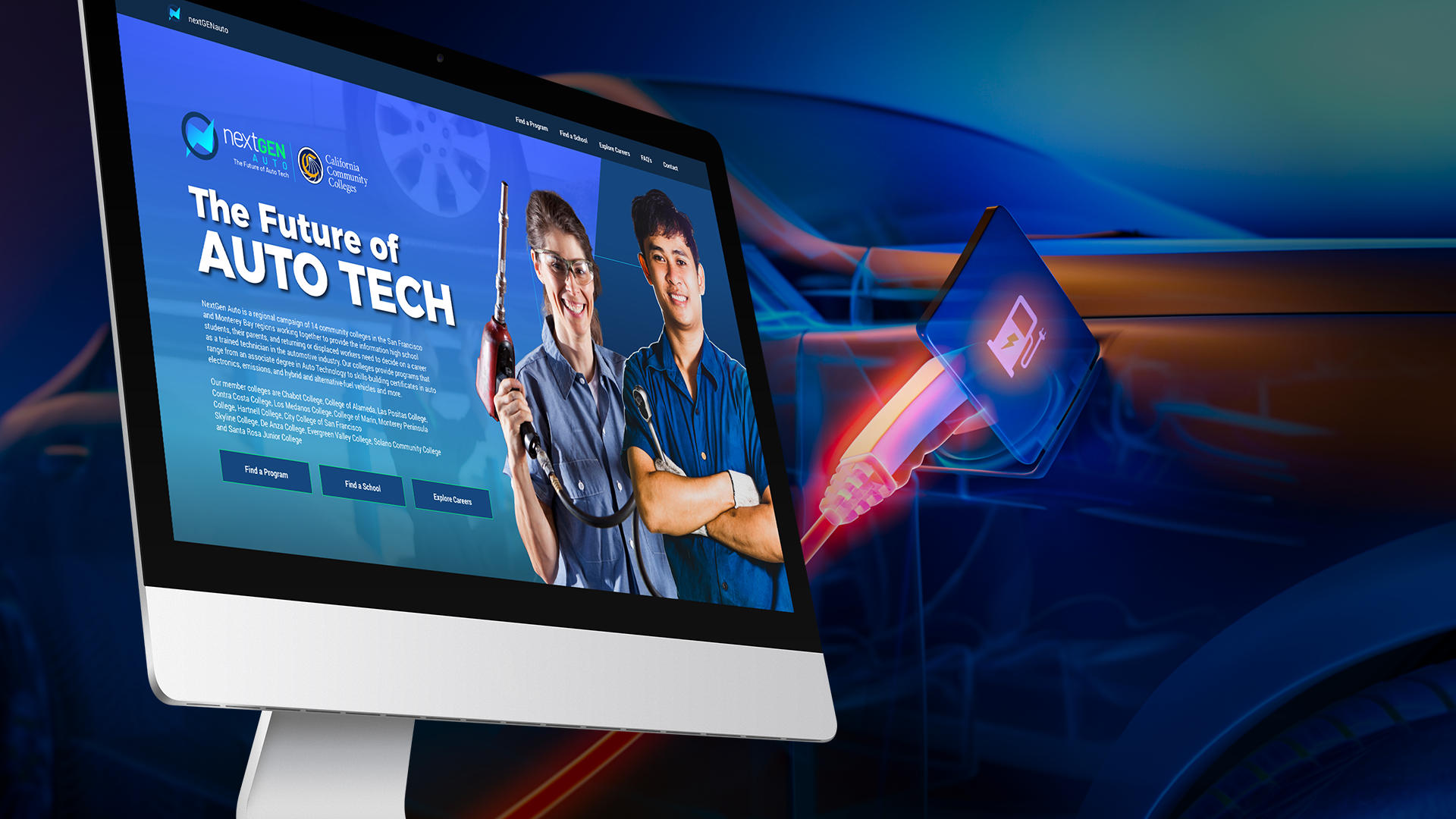
San Francisco Bay Area colleges re-brand “auto” and tap underserved populations in regional campaign
The Current COVID-19 Trends In Education Have Had A Significant Impact On The Methodology And Approach Organizations Need To Consider When Designing Recruitment Campaigns, Especially Through The Lens Of Diversity, Equity, And Inclusion.
Key Takeaways:
- Using Behavioral Targeting Can Result In Motivating Over 4 Times As Many Prospective Students To Connect With Your School.
- Advertising Dollars Can Be Used Much More Effectively To Meet Equity And Enrollment Goals When Deployed Using Simple Behavioral Targeting In Combination With Traditional Zip Code Targeting.
- Research To Understand What Motivates Your Core Target Student Can Pay Off In A Big Way!
The Current COVID-19 Trends In Education Have Had A Significant Impact On The Methodology And Approach Organizations Need To Consider When Designing Recruitment Campaigns, Especially Through The Lens Of Diversity, Equity, And Inclusion. Conventional Marketing Says Studying Demographics Such As Age, Education, And Ethnicity Is The Way To Get To Know Your Target Audience. But That Really Just Tells You Who You May Want To Target And Gives Little Information About The Emotional Catalysts That Will Propel Prospective Students To Enroll.
That Type Of Behavioral Information Is Found In Psychographics, Which Dives Into Attitudes, Values, And Desires And The Motivators Or Barriers To Making A Decision, Such As Moving Into A New Career Pathway. It Has Been Well Documented That Humans Process Information And Make Decisions Based On Emotion. And Emotions Are At An All-Time High, With About One-Third Of U.S. Adults Experiencing Stress, Anxiety, And Great Sadness Due To COVID-19.
With More Than 6,000 To 10,000 Ads Seen Daily In 2020, How Can You Apply Psychographics To Target Key Market Segments And Cut Through The Noise? Here’s A Mini Case Study:
In Fall 2020, The Advanced Transportation And Logistics (ATL) Sector Worked With Full Capacity Marketing (FCM) To Develop And Execute Strategies For Increasing Student Enrollments In Its Auto Tech Programs For Its 14 Regional Colleges Through A Lead Generation Campaign. Target Audiences For The Campaign Included High School Students And Their Parents, With An Emphasis On Underrepresented Populations And A Secondary Target Of Returning And/Or Displaced Workers Ages 19-34.
The Emerging Higher-Tech Auto Sector Required A Repositioning Strategy To Remove The Stigma Attached To The Perception That Being A Mechanic Is A Grease-And-Grime Job And Create A New Brand To Attract Students To The Emerging High-Tech Environment. Looking At Motivators And Barriers To Pursuing Training Within This Environment, The Psychographic Profile Of A Typical Student Who Would Be Interested In Studying Auto Technology Within The New High-Tech Environment Revealed A List Of Characteristics To Support Ad Messaging Such As:
- Practical And Conventional
- Linear-Thinkers
- An Aptitude For A Sport Or Other Eye-Hand Coordination Skill
- Typically An Average-To-Below-Average Student, With Grades Reflecting Lack Of Interest And Motivation Or Environmental Issues More Than Intelligence
- Quite Good With Technology But Not Academically Focused
- May Have Fears About Attending School Online
- Willing To Try New Things Given Guidance And Clear Direction
- Motivated By The Structure Of Auto Pathways
- Understands The Value Of Postsecondary Training In Obtaining A Living-Wage Job
- Are Not Necessarily Aware Of The Opportunities Available
Emerging From The Research Was A Repositioning Statement For Auto Tech, Which Drove The Development Of The Campaign Name And Logo: NextGen Auto With The Key Messages:
Automotive Technology Certificate And Degree Programs Offer The Perfect Pathway To A Stable And Rewarding Career For Those With Manual Dexterity, Computer Savvy, And The Drive To Be A Key Part Of How We’ll Live In The Future.
Watch How This Translated To The Ad Message.
The Psychographic Modeling That Led To The Foundational Repositioning Of High-Tech Auto Through The NextGen Auto Brand Was A Critical Step In Understanding The Types Of Students Likely To Enroll And To Expanding Awareness To Underrepresented Populations. Minority Neighborhoods Across The Region, Especially Those Without Clearly Defined High School-To-College Automotive Pathways, Were Identified For Targeted Ads. In Addition, A Key Target Was Increasing The Number Of Women Entering The Field.
The Results?
- The Campaign Yielded 35% Of All Leads From Women Interested In Pursuing Automotive Technology Education.
- The Campaign Engagement Rates Were 4 Times Higher Than The Higher Education Benchmark And 8 Times Higher Than The Rate Of Engagement Across All Industries.
- The Campaign Resulted In A High Capture Rate From The Lowest Income, Highest Unemployment Zip Codes, With 85% Of All Leads From These Zip Codes.
Are You Interested In Elevating Your Recruitment Strategies? Contact Us For An Evaluation Of Your Past Or Current Campaigns, And How You Can Apply Psychographics To Save Money And Garner More Enrollments.
Share this article
Industry-Driven Workforce Strategies: The College of the Canyons High Road Training Partnership Case Study
Learn how one community college collaborated with business, workforce, and economic development organizations to create a sustainable career pathway model within their local community.

2026 Workforce & Education Marketing Trends: The Multi-Touchpoint Conversion Journey
In education and workforce development, we aren’t simply promoting a product; we are asking individuals to make a significant and life-changing decision. For the hardest-to-reach learners, this choice now takes an average of 30 touchpoints before they decide to enroll. Explore the four essential strategic shifts needed for the coming year.

Mapping Content Topics for the Higher Education Recruitment Funnel
For today’s learners — especially adults balancing work, family, and a return to education — the path to enrollment is rarely linear. This blog details the specific content topics and formats needed to navigate today’s non-linear paths to enrollment.
Thought Leaders in Workforce, Education & Entrepreneurship
FCM partners with BW Research to create Employment BounceBack Blueprints to drive employment and rebuild communities
High unemployment, business closures and industry re-alignments – these are the critical issues workforce and education professionals are tackling as they work to rebuild their communities amid COVID-19. The Strada Center’s The Public Viewpoint: COVID-19 Work and Education Survey confirms this, revealing that 46% of individuals surveyed report they have lost their job or have […]
High unemployment, business closures and industry re-alignments – these are the critical issues workforce and education professionals are tackling as they work to rebuild their communities amid COVID-19.
The Strada Center’s The Public Viewpoint: COVID-19 Work and Education Survey confirms this, revealing that 46% of individuals surveyed report they have lost their job or have had their income reduced due to COVID-19. More than half of Americans are worried about losing their job as a result of the pandemic, while one-third of individuals surveyed think if they lost their job, they would need additional education and training to get a comparable job.
These are all challenges that workforce and education can solve. But in this fluid environment, what are the best ways for leaders in this space to keep their pulse on the relevant data that drives immediate investment decisions for employers, jobseekers and students?
“The issues facing our workforce and education systems right now is a level of job volatility, that most of us have not experienced in our lifetimes,” said Josh Williams, president of BW Research, Inc. “Employment in primary occupational categories like service, sales and transportation positions have all declined considerably in a matter of months and the job market has gone from historically tight to historically loose. The right data gives leaders the information they need to develop specific workforce and education strategies to help communities bounce back quickly and develop job resilience for those looking for work or preparing for the job market. We’ve seen this in communities like Santa Cruz County and the Northern Santa Barbara area, who are taking this research and investing in strategies and programs to support students, workers and businesses in their communities.”
BW Research partnered with Full Capacity Marketing, Inc. (FCM) to design #BounceBack Blueprints, data-driven recovery campaigns that are two-pronged in that they guide workforce and education decision-making processes during the pandemic and provide communications tools that are used in a structured community campaign designed to engage those who benefit or could benefit from your services, as well as your partners.
FCM founder and CEO Celina Shands explains the need for the community campaign as part of the #BounceBack Blueprints this way, “Just as workforce and education systems need a structured process for evaluating the right data for informed decision-making, the end results and plan need to be proactively communicated to regional stakeholders and customers so they know how to tap into resources and are guided by the recovery plan.”
In the past six weeks, FCM has deployed various types of campaigns to support organizations in sharing recovery information and uniting communities. From #Comeback California, which supports local educational agencies in showcasing models and practices to return kids to school safely, to #BounceBackContraCosta, in which the local workforce development board moved its Workforce Innovation & Opportunity Act processes online, communications strategies are a key component of executing any type of recovery strategy.
BW Research and FCM have partnered to create a tailored data-driven blueprint. The blueprint consists of an analysis of the post-pandemic region, for planning purposes, and includes the development of a recovery campaign that proactively provides residents with information about recovery strategies and resources within the region that can be used to rebuild. The campaign includes a dedicated microsite with a domain reflecting the campaign name, fact sheets about the recovery, a press release to announce the campaign and a bank of social media posts to engage the community and partners in rebuilding efforts.
To get started, go to www.EmploymentBounceBack.com and click on the Get Started button. Below are key questions our new service will answer for you. Download a table of contents to see what is contained in your tailored report.
 Key Questions Answered in our #BounceBack Blueprint:
- What industries and occupations are showing the strongest signs of recovery in your region and which are unlikely to recover quickly?
- What does economic and job resiliency look like in your community?
- What types of investments are needed to retrain workers into high-demand occupations and sustainable career pathways?
- Which workers and households were displaced by the pandemic recession, and how can we support their transition to more sustainable careers?
- What strategies and programs should you consider to ensure economic mobility is available to all residents of your region, across age, ethnicity and race, gender, and income levels?
- How do you use this data to develop the right strategies?
- How do you reach your stakeholders in a virtual world?
- How do you transform your plan into an uplifting campaign to encourage jobseekers, students and employers to bounceback?
Share this article
2026 Workforce & Education Marketing Trends: The Multi-Touchpoint Conversion Journey
In education and workforce development, we aren’t simply promoting a product; we are asking individuals to make a significant and life-changing decision. For the hardest-to-reach learners, this choice now takes an average of 30 touchpoints before they decide to enroll. Explore the four essential strategic shifts needed for the coming year.
How One Local Workforce Board is Coordinating Employer Engagement Regionally
Businesses and workers across the country have been nothing if not resilient over the past two years, as they worked to overcome unprecedented challenges brought on by the pandemic. Businesses in California’s Santa Cruz County are no exception. A recent report by the Santa Cruz County Workforce Development Board (SCCWDB) highlights the major issues businesses face within […]
Industry-Driven Workforce Strategies: The College of the Canyons High Road Training Partnership Case Study
Learn how one community college collaborated with business, workforce, and economic development organizations to create a sustainable career pathway model within their local community.
Thought Leaders in Workforce, Education & Entrepreneurship
3 Ways Workforce & Education Organizations Can Use Emotional Messaging to Engage, Recruit and Retain Students & Job Seekers During COVID-19
It has been well documented that humans process information and make decisions based on emotion.

It has been well documented that humans process information and make decisions based on emotion. And emotions are a major part of the pandemic, with about one-third of U.S. adults experiencing stress, anxiety, and great sadness due to COVID-19, according to a recent Commonwealth survey.
Given this information, workforce and education organizations should re-examine recruitment and retention strategies for students and jobseekers, looking at their approach in the context of COVID-19. Context matters. Unless your organization’s messages are well researched and developed with COVID-19 in mind, you will be wasting valuable time, money and resources. To be successful, your messaging must appeal to your target audiences’ emotional state.
In a previous blog, we discussed the power of personas in developing your message. With COVID-19, and the range of fears it has created, it’s important to consider what students and jobseekers are likely to be thinking, feeling and experiencing when your messages land in front of them. It’s important to meet them where they are at without telling them how they should feel, otherwise you run the risk of delivering what can be interpreted as a patronizing message.
Here are three strategies to use to strike the right balance to engage, recruit and retain students and job seekers during COVID-19:
- Let your customers do the talking.
Use human-centered messaging. Those students and jobseekers who have shifted to online learning and have reinvented their lives during COVID-19 create an authentic voice to demonstrate how they overcame their fears and anxiety by working with your organization. Sharing their real-world challenges and how they are coping will resonate with other students and jobseekers facing similar dilemmas and will put your brand front and center as the solution. Capture their stories in both video and written format for outreach purposes. - Demonstrate empathy.
Your staff is also going through challenging times and adjusting to a virtual work environment. Simple iPhone videos showing the day in the life of a counselor, case manager or support staff member will demonstrate the ways in which your organization is adapting to serve customers as a result of social distancing. It also creates brand stickiness in demonstrating not only the new ways of servicing customers but creating an emotional feeling that “we are in this together.” - Capture friends’ and family members’ stories
A study of first-generation college students published by the U.S. Department of Education’s National Center for Education Statistics showed children of college-educated parents are much more likely to pursue and complete an undergraduate degree than are young people whose parents did not attend college. First-generation college students are more likely to be of a lower socioeconomic status and have less money to cover their college costs. Because this audience often doesn’t have the advantage of parents’ firsthand college experience to guide them through the college-going process, a powerful story would be the voice of a family who were able to break these trends to pursue education. A video or story about a parent who guided their child to obtain life-changing training and education during COVID-19 – training that improved life for the entire family – could have a significant impact to inspire others to do the same.
Each of these strategies require a coordinated approach between your organization’s various departments to deliver effective messaging at the critical touchpoints for your jobseekers and students. Let us help you break down organizational silos and create a strong digital presence that delivers timely, effective messaging tapping into the channels your target audiences use.
Schedule a consult to evaluate your messaging and mediums so you can re-position your organization’s communication in the new COVID-19 environment. Learn more about our “come back” campaigns for workforce and education organizations.
Share this article
From Digital Noise to Community Trust: How One Adult School Skyrocketed Net Fans by 3,950%
Social media provides organizations with a space to build trust and develop meaningful relationships with their audiences. By implementing an intentional social media strategy, South Bay Adult School successfully enhanced its outreach, resulting in increased post impressions, engagement, and more meaningful connections with students.
Industry-Driven Workforce Strategies: The College of the Canyons High Road Training Partnership Case Study
Learn how one community college collaborated with business, workforce, and economic development organizations to create a sustainable career pathway model within their local community.

The Powerful Synergy Between Paid and Organic Social Media
Organic and paid social media are both powerful tools, each serving a distinctive purpose. At first glance, the distinction seems simple: organic is free, while paid is not. But the difference goes beyond cost– it’s about strategy, goals, and how audiences are reached. Organic social media refers to any content shared on a social media […]
Thought Leaders in Workforce, Education & Entrepreneurship
COVID-19 “Comeback Campaigns” are powerful proactive communications for your workforce and education customers
Nearly half of all Americans indicate that they’ve already lost income as a result of COVID-19 with two-thirds worried about losing their jobs no matter their education level, according to Strada’s 2020 The Public Viewpoint: COVID-19 Work and Education Survey. Additionally, one-third believe they need more training or education to weather the storm. In this fluid […]
Nearly half of all Americans indicate that they’ve already lost income as a result of COVID-19 with two-thirds worried about losing their jobs no matter their education level, according to Strada’s 2020 The Public Viewpoint: COVID-19 Work and Education Survey. Additionally, one-third believe they need more training or education to weather the storm.
In this fluid environment, educators and workforce professionals must have their pulse on sector needs in order to prepare the talent pipeline. Workers, on the other hand, need to understand where the jobs are and what skills are needed in order to compete in a landscape that is riddled with high unemployment. How are you getting critical information about how to recover from the economic impacts of the pandemic to employers, job seekers and students?
In the past six weeks, FCM has deployed various types of campaigns to support organizations in sharing recovery information and uniting communities.
#ComeBackCalifornia – A campaign designed by the California Collaborative for Educational Excellence to spotlight local educational agencies’ (LEAs) collaborative approaches to getting California’s students back to school. It focuses on sharing tools, resources, and practices to leverage partnerships and facilitate dialogue among LEAs to support each other during the pandemic.
Behind Every Employer – Because it is imperative for educators to understand the ever-changing needs for the workforce in these unprecedented times, SkillsUSA and the Coalition on Adult Basic Education (COABE) launched this campaign to build awareness among high-growth business sectors about using adult education and CTE (career technical education) as a smart workforce-development strategy – one that employers should use to sustain and grow their enterprises during the COVID-19 recovery.
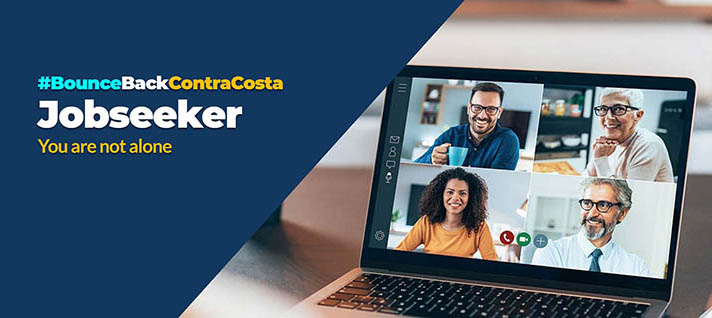
#BounceBackContraCosta – Executing Workforce Innovation & Opportunity Act mandatory workshops for participants online and getting employers equipped with tools and resources to re-open is the focus of this campaign led by the Workforce Development Board of Contra Costa County.
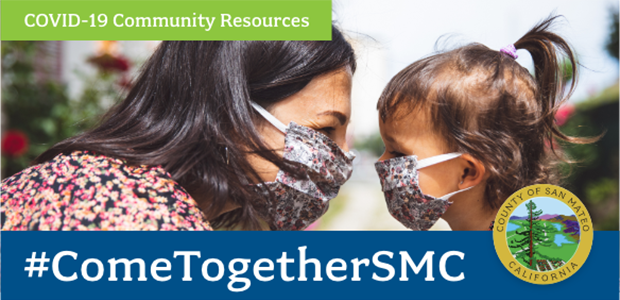
#ComeTogetherSMC – A simple, consistent e-newsletter with print copies mailed to underserved populations to keep the County of San Mateo informed about critical information related to the pandemic and workforce services.
Let FCM work with you on your campaign to align your community around your workforce and education COVID-19 recovery efforts. Contact us for a complimentary strategy session on how to replicate these campaigns in your service area.
Share this article

Does Your Organization Have an AI Mindset? One Workforce Executive Director Weighs In
For workforce development & education organizations, the rise of artificial intelligence poses a complex challenge: conflicting perspectives between employers who want AI-ready workers and job seekers who might be anxious about AI replacing them. Learn how one workforce executive director created an AI sector strategy.
How One Local Workforce Board is Coordinating Employer Engagement Regionally
Businesses and workers across the country have been nothing if not resilient over the past two years, as they worked to overcome unprecedented challenges brought on by the pandemic. Businesses in California’s Santa Cruz County are no exception. A recent report by the Santa Cruz County Workforce Development Board (SCCWDB) highlights the major issues businesses face within […]
Understanding Brand Sentiment Analysis: A Game-Changer for Organizations, Brands, and Entrepreneurs
At the start of Q3 2023, 64.5% of the world’s population were using the internet – a total of 5.19 billion people! According to DataReportal, 94% of internet users also use social media every month (Digital Around the World — DataReportal – Global Digital Insights). In today’s hyper connected digital landscape, brand sentiment analysis has […]
Thought Leaders in Workforce, Education & Entrepreneurship
The Power of Personas!
COABE National Conference Session: Pre-work for Recruitment of Adult Students During COVID-19 July 8, 2020 9 a.m.-10 a.m. PDT | Noon-1 p.m. EDT You’ve likely heard the term persona. But what, exactly, is a persona? And how do you create one? FCM will answer those and other questions related to student personas during a virtual […]

COABE National Conference Session: Pre-work for Recruitment of Adult Students During COVID-19
July 8, 2020
9 a.m.-10 a.m. PDT | Noon-1 p.m. EDT
You’ve likely heard the term persona. But what, exactly, is a persona? And how do you create one? FCM will answer those and other questions related to student personas during a virtual live session on recruiting adult students during COVID-19 at the 2020 COABE National Conference. We’ll cover how to create a compelling message using student personas, which are fictional, generalized representations your target student.
You want to create personas to better understand the student you are trying to attract to adult education. Knowing your target student well allows you to develop precise, strong messaging that resonates with that student. To create personas, you want to dig into your organization’s demographics, as well as any research you have related to your target audience’s behavior patterns, motivations, and goals. Once you have your persona(s), it will drive your marketing strategies and tactics, and it allows for alignment across the marketing plans of individual schools.
Using Personas to Connect
Here’s an example of a student persona:
L’chelle works in housekeeping at the local hospital. She started right after high school 10 years ago and has always liked her job. But now she is terrified. She’s happy to have a job but is really struggling having her kids at home from school for who knows how long. Some of the family members she relied on for help with childcare are high-risk for COVID-19, so she’s worried about them, and she doesn’t know what would happen if she got sick. Six months ago, she was eager to take classes to brush up on her math and English, in preparation for a nursing assistant course, but now she’s not sure she even wants to work in healthcare.
Creating a persona like L’chelle helps us tap into her emotional needs, which inform the images and language we use when we create posters, write website copy or craft an email. Personas allow us to develop messaging that meets the prospective students where they are at – and when you can make that initial connection, you then have the opportunity to take them from interest to enrollment.
In L’chelle’s case, she is stressed and fearful, so using language that acknowledges her state is critical:
It’s really scary right now.
Things feel so unsafe.
Will life ever feel normal again?
It’s important to be authentic in your messaging, expressing the types of concerns you would express to your prospective students in person. It helps to envision yourself having an in-person conversation with the person on the other end of the message. What are those real words you would use to connect with them (based on what you know about them) – those are the words they need to hear.
Once you can connect with potential students, they are in a place to listen to the solution you offer, in this case, adult education. Again, you want to meet them where they are at:
If you can be sure of anything, it’s that education will help you keep or find a job.
Investing in your future beyond COVID is a safe decision.
You can make education a part of your new normal.
Key Questions to Ask When Creating a Persona
In our conference session, we’ll show you how to develop a persona and how to use them to develop the best language to use in all of your outreach efforts.
In the meantime, there are three key questions you want to ask yourself as you develop your personas:
- What worries my students the most – Unemployment? Their health? Bills? Childcare?
- How much has the pandemic impacted their day-to-day lives? – Do they have a job and stable housing? Is there a health crisis in their family? Are their kids home from daycare or camp, which means they may have to balance work and parenting?
- How do they see online learning? – Is it foreign to them? Are they willing to try it? Helping their kids learn online has been so frustrating they can’t see doing it themselves?
Share your answers in the comments section!
Like this article?
If you like this article we recommend downloading our eBook below to get better informed
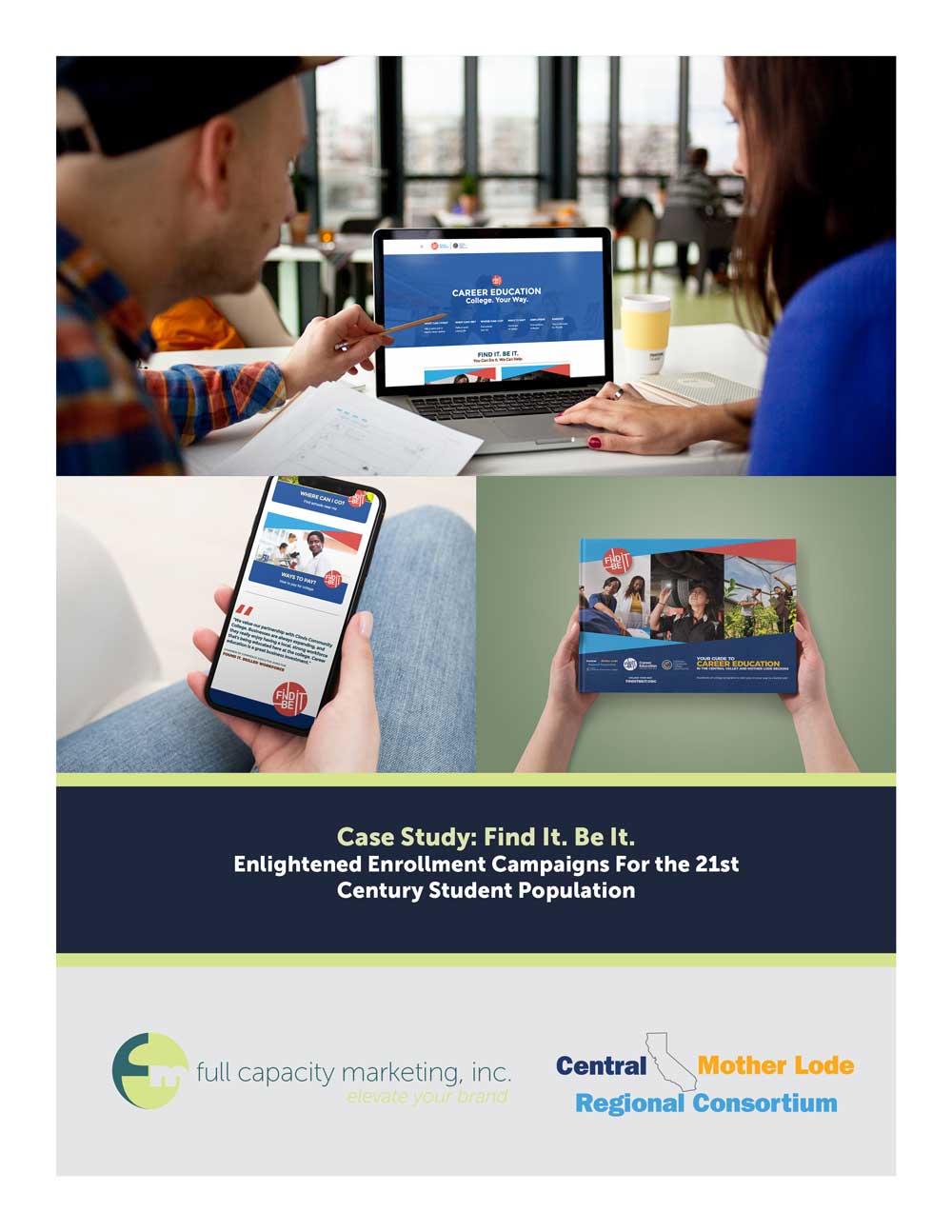
Case Study: Find It. Be It.:
Enlightened Enrollment Campaigns for the 21st Century Student Population
Share this article

Getting Down to Business: Advocating for Small Businesses on Capitol Hill
FCM’s VP of Operations, Anika Jackson is a member of the Intuit Small Business Council which represents over 10 million small businesses. She recently had the privilege of participating in a visit to Capitol Hill to brief policy makers on the challenges facing small business owners and advocate for policies that support their growth and […]
Industry-Driven Workforce Strategies: The College of the Canyons High Road Training Partnership Case Study
Learn how one community college collaborated with business, workforce, and economic development organizations to create a sustainable career pathway model within their local community.
Brand Videos: A Valuable Asset for Workforce & Education Organizations
Often short, well-produced, and designed to capture the attention of a target audience, a brand video is a marketing tool that promotes a brand, its products or services, or its values and mission. In today’s fast-paced digital landscape, many private sector companies use well-crafted brand videos to stand out from their competitors. But can this […]
Thought Leaders in Workforce, Education & Entrepreneurship
Will Community College Enrollments Really Rise During the COVID-19 Recovery?
This blog explores the opportunities community colleges have to increase enrollments in CTE and how personas can create the right messaging to attract them.

Part 1: The Opportunity in Career Technical Education
Historically, community college enrollment has increased during times of recession. During the last recession, enrollment at community colleges increased by 33% between 2006 and 2011, according to the U.S. Census Bureau.
In 2010, 29% of all students enrolled were in two-year colleges. By 2015, this share had fallen to 25%, which was below the pre-recession average of 26%. However, the number of students enrolled in two-year colleges was still 10% above the 2006.
Will these enrollment spikes hold the same as the economy recovers from the coronavirus? Already, an estimated 28 million Americans have canceled their plans for education, according to an April consumer survey by the Strada Education Network’s Center for Consumer Insights. So far, the number of people intending to pursue more education or training as part of a recovery path has not increased in the last year.
However, the survey also found that the majority of adults considering enrolling in an education or training program in the next six months prefer non-degree programs. And for those Americans looking to enroll in the next six months, 34% would seek more skills in their current career field, while another 34% would seek skills for a new career field.
Given this data, colleges would benefit from including in their fall 2020 recruitment plans marketing that promotes their career technical education (CTE) certification programs, which give students a fast-track to a new career or allow them to quickly gain news skills that help them in their current jobs. Recruitment efforts should include highly targeted outreach to students who are most likely to enroll in CTE courses.
In this blog, we explore increasing CTE enrollments.
Marketing CTE: It’s all about the personas
A common misconception about CTE is that it’s training that leads to dead-end jobs with no room for advancement. This article by the National Education Association describes CTE programs as once being designed to track students who supposedly weren’t “college material” into jobs after high school. In reality, CTE graduates are 10%-15% more likely to be in the labor force and make 8%-9% more in annual income, according to the Brookings Institute.
FCM has worked with more than 100 colleges across the nation to increase CTE enrollments within a multitude of markets. Our collective research and outcomes demonstrate that those likely to enroll in CTE are focused more on how the courses will change their lives than they are on the technical knowledge they will gain.
Like many consumer brands, FCM uses psychographic modeling to create individualized student personas – fictional characters who represent the different user types within a targeted demographic, attitude, or behavior set who are likely to enroll. Personas often are combined with market segmentation to represent specific customers and is an especially effective tool for capturing the nuances within a college’s diverse region.
Personas in Action
Enrollment in CTE was declining at the 14 California community colleges in the Central/Mother Lode Regional Consortium (CRC), which serves 4.4 million people in 15 counties in central California. Given the broad geographic area covered by the consortium, including mid-size cities, small towns and rural areas, and wide range of ages, it was important to discover the unifying core messaging that would cut across age, background and lifestyle.
While there were several key motivating factors including a common one of finding good jobs, as important in this region was that the jobs needed to be close to home. Connection to community and family was a major factor in decision-making for students in the region.
Here are two examples of personas that led to the development of the successful CRC enrollment campaign:
Example #1:Rosa – The Mainstream Good Student
Rosa is the oldest of four girls and two boys. Her mom and dad are agricultural workers. Rosa did well in high school, but she doesn’t know anyone other than her teachers who have a degree, and no one expects her to continue her education after high school. The expectation is she will stay close to home and be there for her family. Rosa graduated this year and works in a minimum-wage job. She has a wide group of friends and family in the community, and they are an important part of her life. She loves to post her fashion choices on Instagram and connect in person and on Snapchat with her female same-age cousins. Her younger cousin’s quinceañera is coming up, and she is excited to get together with her whole extended family. She is ELC for UC Merced, but even that is too far, in distance and culture, from her family and the life she knows and loves.
Example #2: L’chelle -The Mainstream Lost and Found

L’chelle did not graduate from high school but completed her GED after 10 years of working as a cafeteria worker at a local hospital. Her children are in school, and she would like to get a better job, so she can send them to college someday. Her extended family all live in the area, and she sees them regularly. She knows people at the hospital who have postsecondary education at all levels but is not exactly sure what options are available or even if she wants to work in healthcare. She has changed her life and has the ability to focus and pursue new opportunities now at an older age.
From Personas to Enrollment Messaging
Knowing the motivations of potential students is critical to the development of messaging and telling stories that resonate with those of similar beliefs. In the examples above, there is a core emotional need of potential students to work at good-paying jobs that allow them to stay and thrive in their own communities.
Tested across multiple stakeholders, the brand name and tagline, Find It. Be it. – College Your Way, resonated most favorably with prospective students likely to enroll in career education and formed the platform to create lasting emotional bonds.
Check out this sampling of the videos in which students shared their experiences of how CTE delivered good jobs, close to home:
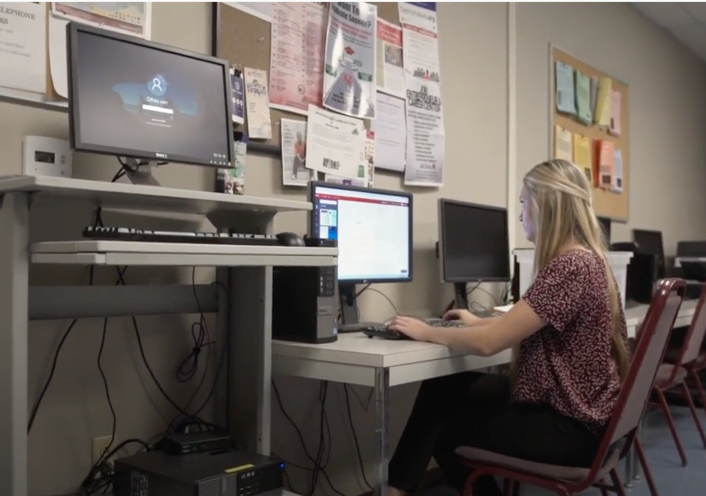
Joselyn Buckley was accepted and prepared to attend a 4-year college to study cybersecurity. Two weeks before she accepted the offer, she had second thoughts that led her to Porterville College.
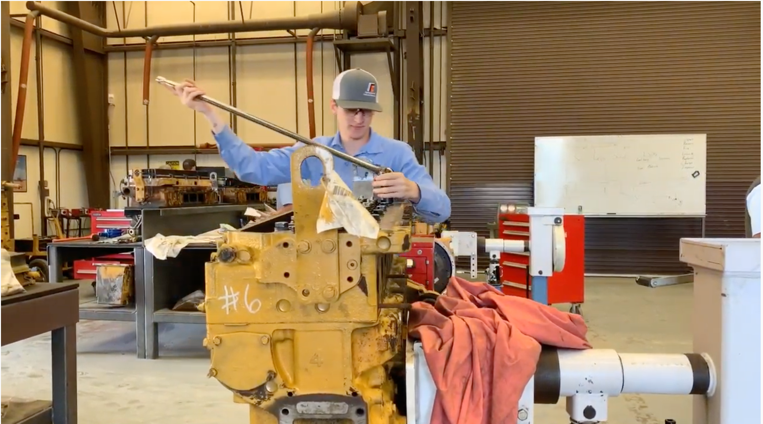
Brendan Miller knew he was interested in a hands-on job, and he found his instructors were adamant about placing students in good jobs.
Like this article?
If you like this article we recommend downloading our eBook below to get better informed
Case Study: Find It. Be It.:
Enlightened Enrollment Campaigns for the 21st Century Student Population
Share this article
Getting Down to Business: Advocating for Small Businesses on Capitol Hill
FCM’s VP of Operations, Anika Jackson is a member of the Intuit Small Business Council which represents over 10 million small businesses. She recently had the privilege of participating in a visit to Capitol Hill to brief policy makers on the challenges facing small business owners and advocate for policies that support their growth and […]
Industry-Driven Workforce Strategies: The College of the Canyons High Road Training Partnership Case Study
Learn how one community college collaborated with business, workforce, and economic development organizations to create a sustainable career pathway model within their local community.
Brand Videos: A Valuable Asset for Workforce & Education Organizations
Often short, well-produced, and designed to capture the attention of a target audience, a brand video is a marketing tool that promotes a brand, its products or services, or its values and mission. In today’s fast-paced digital landscape, many private sector companies use well-crafted brand videos to stand out from their competitors. But can this […]
Thought Leaders in Workforce, Education & Entrepreneurship
Crisis Communications Strategy
With increasing self-isolation in response to COVID-19, a virtual team model is coming to the forefront for many workforce and education organizations that are accustomed to onsite service delivery for students, job seekers and employers.
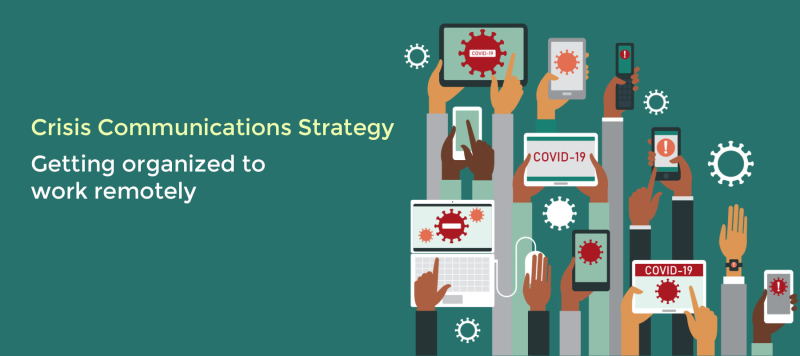
With increasing self-isolation in response to COVID-19, a virtual team model is coming to the forefront for many workforce and education organizations that are accustomed to onsite service delivery for students, job seekers and employers. Here at FCM, we’ve operated using a virtual business model for 18 years, so we are lending our expertise to support workforce and education organizations with crisis communications planning and designing operational structures to maintain efficient communication both internally and with the public.
Here are strategies to keep communication relevant among your virtual staff:
- Identify technology platforms. Working from home, or some other remote location, means you will have to use platforms that help your workforce and education staff communicate in real time; plan to meet virtually with your team and customers/clients; manage projects online; and continue communicating regularly with your customers/clients. You may have other needs, so it’s best to start by making a list your team’s daily activities. Then, match the activities to the most appropriate platforms to make working remotely as smooth as possible for everyone involved. Email us for a pro bono consult about technology with FCM’s CEO.
- Schedule Monday morning meet-up. Using platforms like Zoom and GoToMeeting with webcams, keep regularly scheduled staff meetings every Monday morning to establish team priorities and identify team member roles. During this time when students are switching to online learning and workers are being laid off, discuss operational and communication bottlenecks and devise a cross-training plan to address areas of critical importance.
- Keep consistent business schedules. Nothing has changed in terms of servicing your customers with the huge exception that you now have to move to an online business model that requires even tighter communication protocols. Create a schedule of handling customer inquiries, assigned staff and the methodology for communication (e.g. hotline, text, email).
- Create communication protocols. It is critical to have individual team leads responsible for monitoring emails, social media and texts from customers. These leads need to have access to the people within your organization who can answer questions they on their own may not know how to answer. So it’s important that leads be in regular contact with your organization’s subject-matter experts to ensure information is accurate and timely—platforms like Slack can help with real-time internal team communications to alleviate email backlogs.
- Develop a Crisis Communications Plan (CCP). A CCP is an operational blueprint for how your organization plans to communicate to employees, stakeholders and the public you serve. FCM has created a template for what to consider when creating this plan. You may also schedule a pro bono consult with FCM’s CEO to discuss.
Share this article

Funding Cuts and Fading Relevance? Take Your Brand’s Emotional Temperature
Summer offers more than a break in programming—it’s a chance to reflect, realign, and make intentional choices about how your brand is showing up in the world. For both workforce and education organizations, brand sentiment analysis provides a meaningful way to understand public perception, identify messaging blind spots, and build trust with the audiences who matter most.
Beyond Demographics: How Psychographics Drive Workforce & Education Engagement
Go deeper than demographics—use psychographics to connect emotionally, overcome barriers, and inspire meaningful engagement with your audiences.
Brand Videos: A Valuable Asset for Workforce & Education Organizations
Often short, well-produced, and designed to capture the attention of a target audience, a brand video is a marketing tool that promotes a brand, its products or services, or its values and mission. In today’s fast-paced digital landscape, many private sector companies use well-crafted brand videos to stand out from their competitors. But can this […]
Thought Leaders in Workforce, Education & Entrepreneurship